The Hardest Decision You Will Ever Make
The moment a doctor says "Alzheimer's disease," the world shifts. Everything you thought you understood about the future quietly rearranges itself. And among the thousand questions that follow (about medications, about stages, about what comes next) one eventually rises to the top:
Where should my loved one live?
It is a question families search desperately, often in the middle of the night, often in tears. For decades, the default answer has been the same: a large memory care wing attached to an assisted living facility, or a dedicated memory care unit in a nursing home. Big. Institutional. Staffed in shifts. Managed at scale.
What dementia care research has been showing, and what families who have walked this road often know intuitively, is that for many people living with Alzheimer's disease, the environment matters as much as the services.
At Amazing Grace Assisted Living, it is the philosophy we have built 15 years of care around:
People with Alzheimer's do best in a place that feels like home.
What Alzheimer's Disease Actually Does to the Brain, and Why Environment Matters
Alzheimer's is not simply memory loss. It is a progressive neurological disease that gradually dismantles the brain's ability to process information, navigate space, regulate emotion, and make sense of the surrounding world.
As the disease advances, the brain becomes increasingly sensitive to its environment. Unfamiliar faces trigger fear. Loud or chaotic spaces produce overwhelming anxiety. Large, complex physical environments (long hallways, multiple wings, dozens of strangers) become genuinely difficult to navigate. What a healthy brain filters and dismisses as background noise, an Alzheimer's-affected brain can experience as a direct threat.
Dementia care specialists have long observed that large, complex, noisy spaces can be disorienting for people with dementia and can contribute to agitation. In plain language: the building your loved one lives in is not just a backdrop to their care. It is an active part of how well, or how poorly, they are doing.
What the Research Tells Us About Dementia Care Settings
Researchers have been studying how different care settings affect people with dementia for years, and several findings are worth knowing.
Specialized dementia care makes a measurable difference. A national study led by researchers at Brown University and published in Alzheimer's & Dementia compared residents with Alzheimer's and related dementias in memory care assisted living with those in general assisted living. Residents receiving specialized memory care had a lower risk of hospitalization and of nursing home admission, especially long-term nursing home stays. The takeaway for families: dementia-specific expertise matters, whatever the size of the setting.
Small, homelike settings have shown benefits too. Studies of small-scale, homelike care environments have reported benefits for many residents in areas like engagement in daily activities, social interaction, and quality of life, though results vary from study to study and person to person. Fewer pathways, shorter walking routes, and familiar surroundings tend to mean less confusion and better orientation.
What matters most is the combination. A small home without dementia expertise isn't enough, and neither is dementia expertise delivered at a scale that overwhelms the person receiving it. Families should look for both: trained caregivers and clinical oversight, in an environment calm and familiar enough for their loved one to feel safe.
Anxiety Is the Enemy, and Scale Can Create It
Of all the symptoms that accompany Alzheimer's disease, anxiety is among the most debilitating, and the most heartbreaking for families to witness.
A person with Alzheimer's who is anxious may pace relentlessly, call out repeatedly, resist care, become combative, refuse food, or withdraw completely. These behaviors are not personality defects or deliberate choices. They are the brain's response to a threat it cannot fully identify or articulate, and common triggers include changes in routine and unfamiliar surroundings.
Think about what a large memory care unit can present to a person with Alzheimer's: dozens of unfamiliar faces rotating through shifts. A long hallway of identical doors. Communal dining rooms filled with strangers and competing sounds.
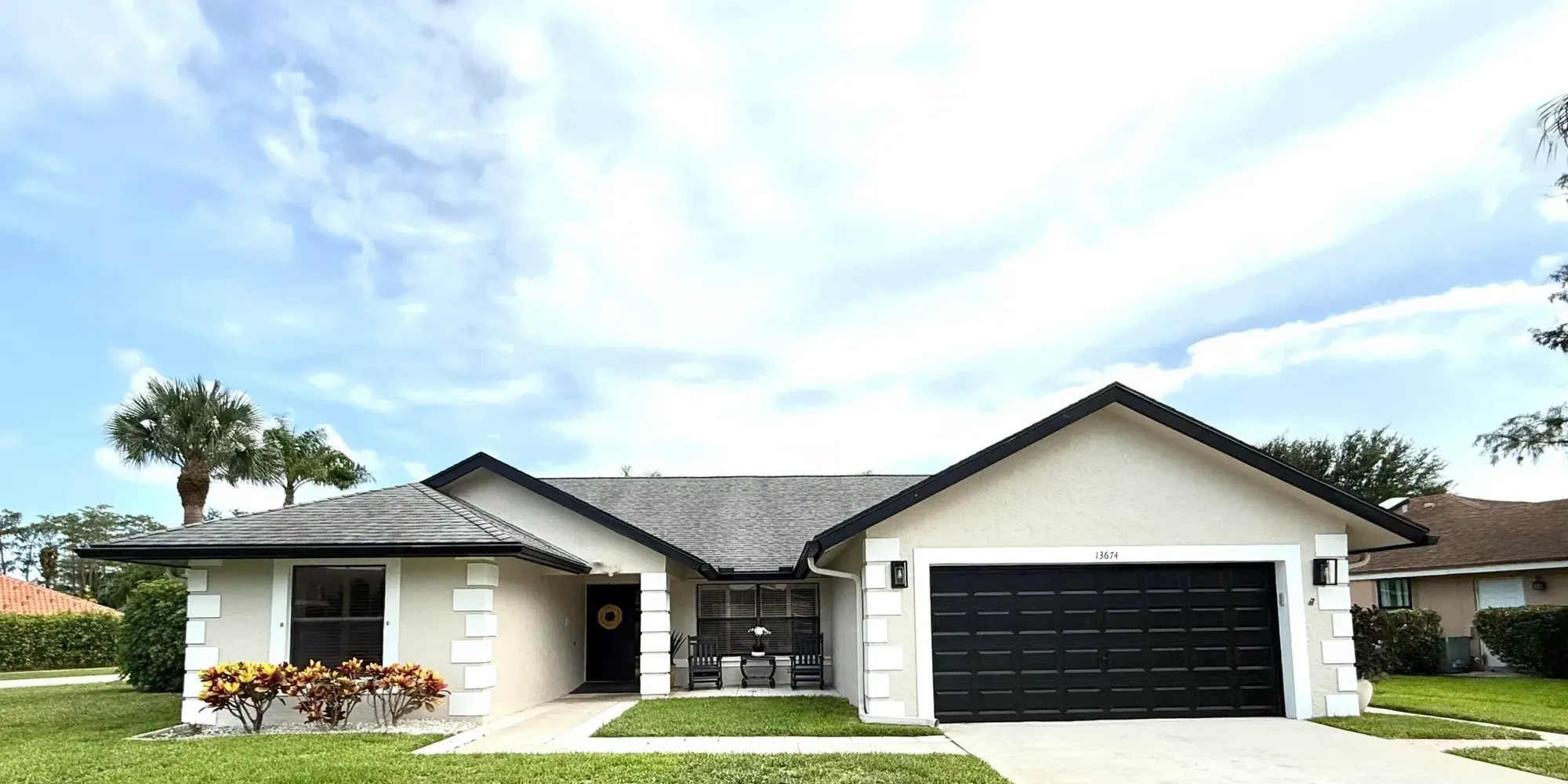
Now think about what a residential home presents: the same handful of faces every day. A kitchen that smells like breakfast every morning. A living room with the same chairs in the same places. Caregivers who greet the resident by name, and who know from months of daily presence that a certain song helps, a certain chair is preferred, and certain sounds bring calm rather than fear.
Familiar Faces, Consistent Routines: Two Things an Alzheimer's Brain Needs Most
One of the most consistent themes in Alzheimer's care is the importance of consistency: consistent environment, consistent faces, and consistent routine.
Large facilities can struggle to provide this. Staff-to-resident ratios of 1:10 or higher mean even dedicated caregivers are spread across too many residents to build genuine individual relationships. Staff turnover means the faces change. Shift rotations mean the person your loved one spent months learning to trust may be replaced by someone new.
At Amazing Grace Assisted Living, our 1:3 staff-to-resident ratio ensures every caregiver has genuine time with every resident: not just time to complete tasks, but time to sit, to talk, to learn, and to observe. A caregiver who knows that a resident was a schoolteacher, that they have a daughter named Maria, and that they become calm when you hum a certain hymn is not just providing assistance. They are providing continuity of self in a disease that progressively erases it.
Security Without Confinement: The Residential Advantage for Exit-Seeking
One of the most frightening behaviors associated with Alzheimer's disease is exit-seeking: the impulse to leave, to find somewhere else, to search for a home, a family member, or a time that no longer exists. It is deeply distressing for families and presents genuine safety risks.
Large facilities often manage exit-seeking primarily through architecture: locked units, alarmed doors, enclosed courtyards. In a small residential home, exit-seeking can be managed more personally. The security is still there (secured properties, alarmed exits, structured environments), but the small scale means a caregiver notices the signs of agitation earlier, can intervene before the behavior escalates, and can redirect with a gentle, individualized approach that works best when you truly know the person in your care.
At our Amazing Grace homes, caregivers are trained in dementia behavior management. They understand that exit-seeking is communication, an expression of an unmet emotional need, and they have both the training and the time to respond to what is actually being expressed.
Protecting More Than Health
Dementia doesn't only affect memory and mood. It affects judgment, and it leaves people vulnerable to scams and financial exploitation, often years before a diagnosis. If your loved one is still living independently, read our guide on protecting a loved one with dementia from financial exploitation.
Alzheimer's and Dementia Resources for Palm Beach County Families
- Alzheimer's Association 24/7 Helpline: 1-800-272-3900 (alz.org), for information, care consultations, and support any time of day or night
- Area Agency on Aging of Palm Beach/Treasure Coast Elder Helpline: 1-866-684-5885 (aaapbtc.org), for caregiver support, respite resources, and Alzheimer's services
- National Institute on Aging: free, plain-language guides on Alzheimer's and dementia caregiving
Choosing the Right Memory Care in Palm Beach County
If your loved one has been diagnosed with Alzheimer's disease or another form of dementia, and you are navigating the search for memory care in Palm Beach County, we want to help: not just with a tour, but with information, compassion, and honest guidance from 15 years of walking this road alongside families like yours.
We have homes in West Palm Beach, Wellington, Palm Beach Gardens, and Lake Clarke Shores, each a small, residential, RN-led home with a maximum of six residents, a 1:3 caregiver ratio, and 24/7 awake staff. Families near Jupiter can read our guide to memory care near Jupiter, FL.
We care for residents with early, middle, and advanced-stage Alzheimer's, and we manage exit-seeking, agitation, and behavioral symptoms with trained, compassionate, consistent teams who understand the disease, and who take the time to understand the person living with it.
📞 (561) 818-5790
📅 Schedule a private tour
Serving West Palm Beach, Wellington, Palm Beach Gardens, Lake Clarke Shores, Jupiter, Boynton Beach, Greenacres, and all of Palm Beach County.



.jpg)