Families often ask me some version of the same question: "Will Mom do better in a small home or a big building?" After 30 years as a Registered Nurse in Palm Beach County, I have my own answer from experience. But families deserve more than my opinion, so this article looks at what researchers have actually found when they compare small, home-like dementia care with larger, traditional settings.
The short version: a growing body of research links smaller, home-like settings with real benefits for people living with Alzheimer's and other dementias. Those benefits include more engagement in daily life, less use of physical restraints and psychiatric medications, better quality of life and fewer trips to the hospital. Not every study agrees on every outcome, and I'll show you where the evidence is mixed. But the overall direction is clear enough that dementia care around the world has been moving toward smaller, more home-like settings.
Why the setting matters so much in dementia
Dementia changes how a person takes in the world. Noise, crowds, long hallways, unfamiliar faces and a constantly changing staff can be confusing and overwhelming, and that distress often shows up as anxiety, restlessness, withdrawal or agitation. A smaller setting removes much of that: fewer people, a familiar layout, the same caregivers each day and a daily rhythm that looks like ordinary home life.
A 2018 review of the research in The Gerontologist found substantial evidence that unit size, layout and a homelike character influence the behavior and well-being of residents with dementia in long-term care.
What the research has found
More engagement in daily life
In a large Dutch study of 136 care facilities and more than 1,300 residents with dementia, people living in settings with more "group living" characteristics were more involved in activities overall, more involved in the activities they preferred, and took part in a wider range of activities (Smit and colleagues, International Psychogeriatrics, 2012).
Another study followed residents for six months after they moved in. Those living in small group homes needed less help with daily activities and were more socially engaged than residents of traditional nursing homes (te Boekhorst and colleagues, International Journal of Geriatric Psychiatry, 2009).
Fewer restraints and psychiatric medications
A study of 259 residents with dementia in the Netherlands found significantly fewer physical restraints and psychotropic drugs used in small-scale, home-like facilities than on traditional wards, and residents there were more socially engaged (Verbeek and colleagues, International Psychogeriatrics, 2014).
For families, this one matters. Antipsychotic medications carry serious risks for older adults with dementia. When fewer are needed, it usually means distress is being handled through care, routine and connection rather than medication.
Agitation and behavior: promising, but mixed
I want to be careful here, because this is the question families ask most. A research summary from Canada's Bruyère Research Institute, which pulled together several systematic reviews, reported that small-scale environments improved residents' behavior, well-being and orientation, and that lower social density reduced behavioral problems and psychotropic drug use. A 2025 meta-review likewise found that small unit size, group living and a homelike, non-institutional design were beneficial for residents' well-being.
But individual studies don't all agree. The same Dutch team that found fewer restraints and medications did not find an overall difference in agitation or neuropsychiatric symptoms (Verbeek and colleagues, Journal of the American Medical Directors Association, 2010), and the te Boekhorst study found no difference in behavioral problems.
My honest read, as a nurse: a smaller setting creates the conditions for calmer days, but it doesn't guarantee them. What makes the difference is how the people in that home use the time and closeness they have. That means knowing a resident well enough to see distress coming, and answering it with comfort instead of chaos.
Better quality of life
In the United States, the best-studied small-home model is the Green House. In its first evaluation, published in the Journal of the American Geriatrics Society in 2007, Green House residents reported better quality of life than residents of two traditional nursing homes, with the same or better quality of care (Kane and colleagues).
In Australia, a 2018 study in the Medical Journal of Australia found that small, home-like "clustered domestic" care was associated with better quality of life and fewer hospitalizations and emergency department visits, without increasing overall costs (Dyer and colleagues). Not every study in this section looked only at people with dementia, but many of the residents in them were living with memory loss.
Fewer hospital trips and complications
A study of 15 nursing homes that adopted the Green House model found that, for residents of the small homes, it lowered hospital readmissions and several measures of poor quality, including bedfast residents, catheter use and pressure ulcers (Afendulis and colleagues, Health Services Research, 2016).
Families feel the difference too
Dementia is a family journey. In the Dutch study, family caregivers of residents in small-scale living reported significantly less burden and were more satisfied with their contact with nursing staff than families of residents on regular wards.
What "small and home-like" actually means
Across these studies, researchers describe the same core ingredients:
- A small group of residents living together in a real home, not along a long corridor
- The same caregivers day after day, so residents are known as people, not room numbers
- Ordinary household life, like meals at a kitchen table, folding laundry and quiet time in a living room
- Less noise, fewer strangers and fewer changes, which means fewer triggers for confusion and distress
- Caregivers with enough time to notice small changes before they become big problems
Where Amazing Grace fits
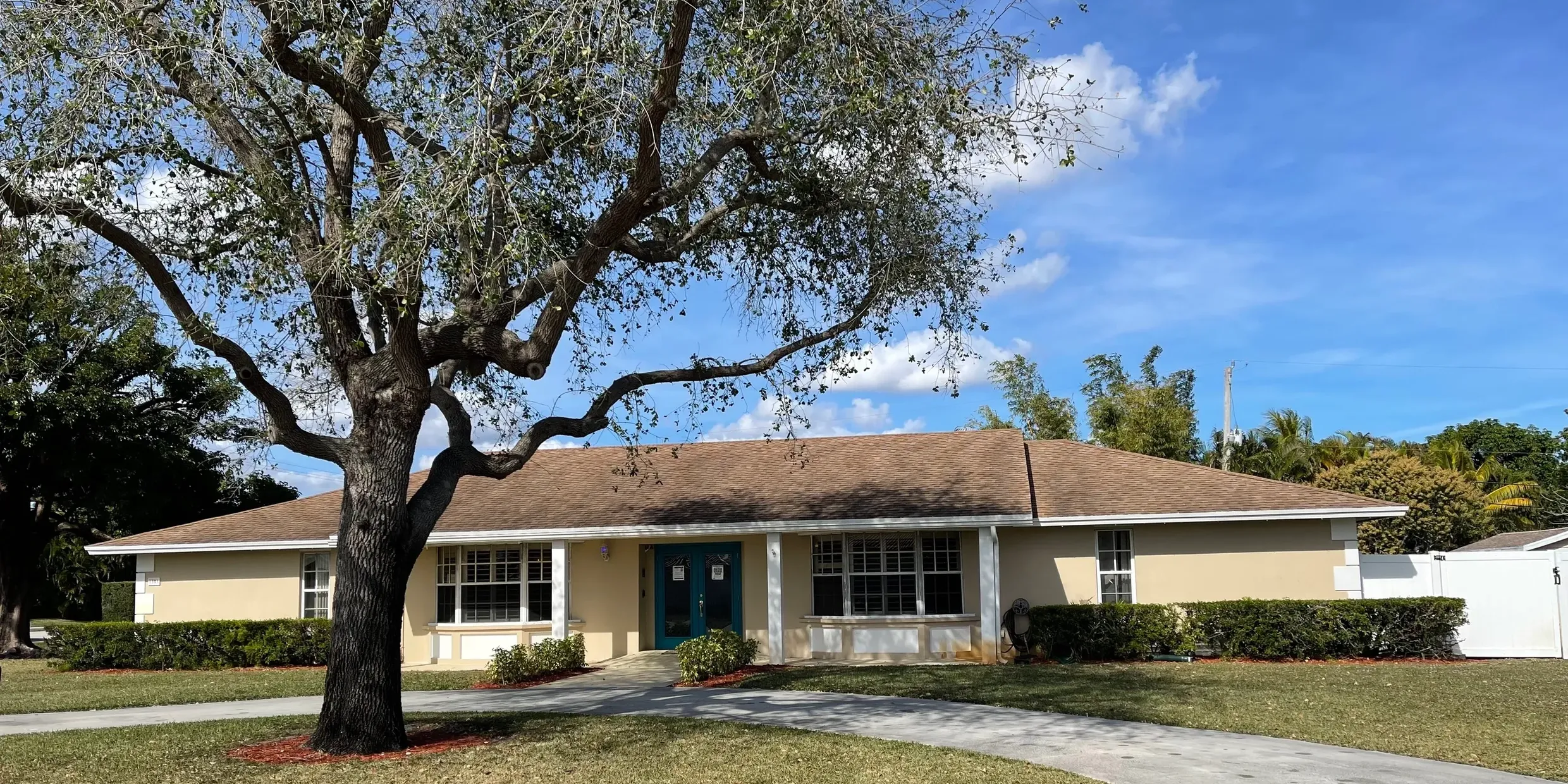
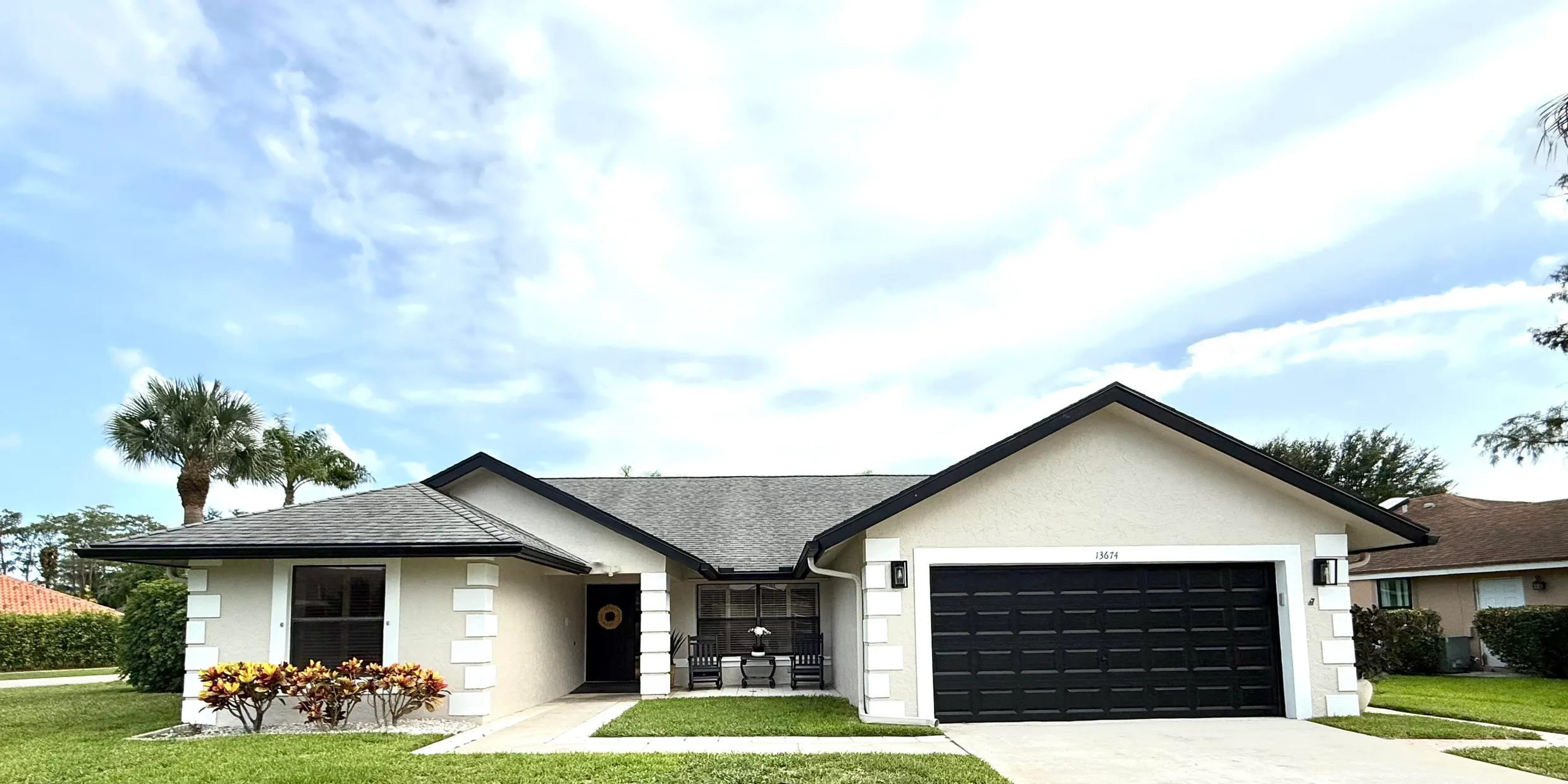
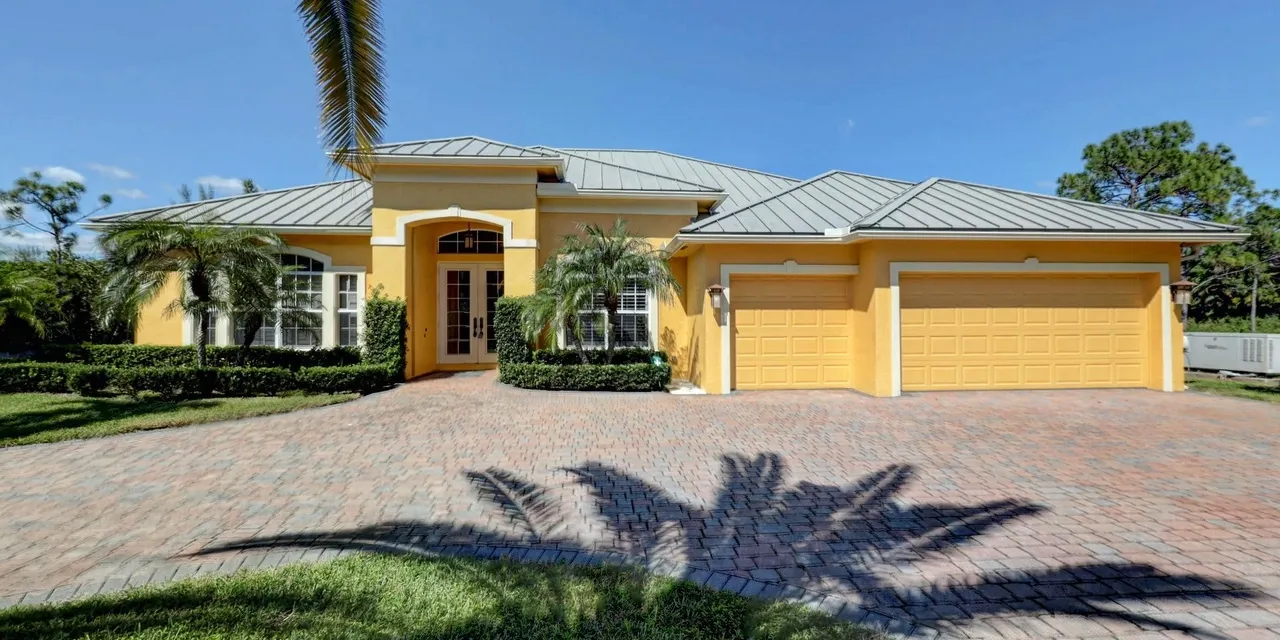
Our six homes in West Palm Beach, Lake Clarke Shores, Palm Beach Gardens and Wellington are real houses on residential streets. We keep a 1:3 caregiver-to-resident ratio during the day, every caregiver has completed Florida's required Alzheimer's and dementia training, and as a Registered Nurse I personally oversee every resident's care plan. Each home also holds the same AHCA assisted living license and follows the same regulations as a 200+ bed facility. Small doesn't mean less regulated.
Caring for residents living with Alzheimer's and other dementias is a big part of what we do, and much of what the research describes is simply how our homes work every day.
Questions to ask on any tour
Whether you visit us or anywhere else, these questions will tell you a lot:
- How many residents live here, and how many caregivers are on duty during the day and at night?
- Will my parent see the same caregivers most days?
- What dementia training do your caregivers have?
- When a resident is anxious, restless or agitated, what do you try before medication?
- How do you work with doctors to keep medications to what is truly needed?
- What does a normal day look like here?
- How will you keep our family updated?
Talk with a nurse
If you're weighing options for a parent living with dementia, I'm glad to talk it through. It's a free consultation, and you'll be speaking with a nurse, not a salesperson. If another option fits your family better, I'll tell you that too.
Call Debbie Lytle, RN, directly: (561) 818-5790, or schedule a private tour at any of our six Palm Beach County homes. You may also find our guide on protecting a loved one with dementia from financial exploitation helpful.
Sources
- Chaudhury H, et al. The influence of the physical environment on residents with dementia in long-term care settings: a review of the empirical literature. The Gerontologist, 2018. PubMed
- Smit D, et al. The relationship between small-scale care and activity involvement of residents with dementia. International Psychogeriatrics, 2012. Link
- te Boekhorst S, et al. The effects of group living homes on older people with dementia: a comparison with traditional nursing home care. International Journal of Geriatric Psychiatry, 2009. Link
- Verbeek H, et al. Effects of small-scale, home-like facilities in dementia care on residents' behavior, and use of physical restraints and psychotropic drugs. International Psychogeriatrics, 2014. Link
- Verbeek H, et al. Dementia care redesigned: effects of small-scale living facilities on residents, their family caregivers, and staff. JAMDA, 2010. PubMed
- Bruyère Research Institute. Dementia: What living environments make a difference? PDF
- The physical environment and the quality of life and behavior in people with dementia: a systematic meta-review, 2025. PMC
- Kane RA, et al. Resident outcomes in small-house nursing homes: a longitudinal evaluation of the initial Green House program. Journal of the American Geriatrics Society, 2007. Summary
- Dyer SM, et al. Clustered domestic residential aged care in Australia: fewer hospitalisations and better quality of life. Medical Journal of Australia, 2018. Link
- Afendulis CC, et al. Green House adoption and nursing home quality. Health Services Research, 2016. PMC
This article is for general education and is not medical advice. Every person living with dementia is different; please talk with your loved one's doctor about their specific needs.
Amazing Grace Assisted Living: RN-owned residential care homes in West Palm Beach, Lake Clarke Shores, Palm Beach Gardens, and Wellington, FL. Licensed by the Florida Agency for Health Care Administration.